

Hedera (HBAR) is gaining bullish momentum after breaking above a descending channel, suggesting a possible shift in market direction. At the same time, growing payment use through Go Rosen and USDC is expanding cross-border access and highlighting Hedera’s potential for real-world financial applications.
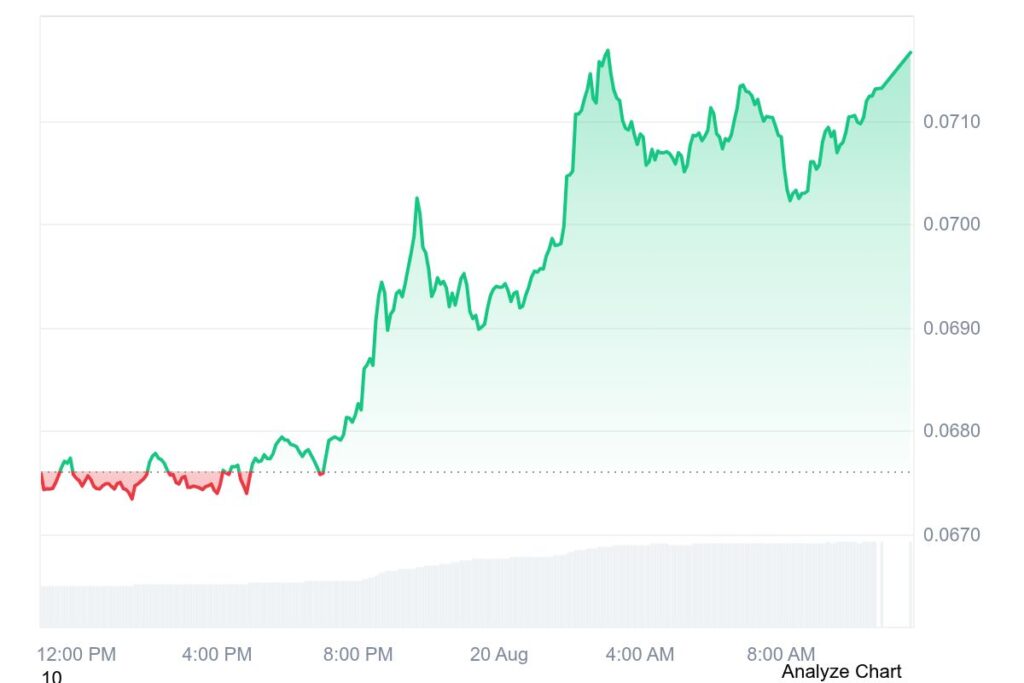
At the time of writing, according to CoinMarketCap data, the token is trading at a price of $0.07137, with an increase of 5.67% in the past 24 hours and a rise of 7.79% over the past week.
HBAR Price Breakout Targets $0.07326 as Bullish Momentum Builds
According to prominent crypto analyst Alpha Crypto Signal, HBAR has broken above a descending channel, suggesting a possible shift in market direction. The move indicates buying interest is returning after a prolonged decline, while traders monitor whether the token can hold its reclaimed support.
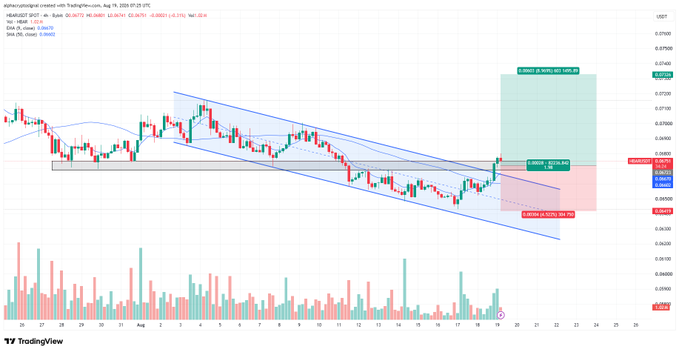
If HBAR successfully defends the reclaimed support, the current bullish structure could strengthen further. A firm retest would confirm that the previous resistance has turned into support, potentially giving buyers confidence to push toward higher resistance zones.
The next phase will depend heavily on sustained buying pressure and HBAR’s ability to remain above the breakout area. Continued support could open the path toward $0.07326, while stronger momentum may signal that the broader downtrend is losing its grip.
However, failure to hold the reclaimed level could weaken the breakout and revive selling pressure. A sustained move below support would raise the risk of a false breakout, suggesting that HBAR may need more consolidation before attempting another recovery.
Hedera Expands Global Payments With Go Rosen and USDC
Hedera noted that its growing use in payment-focused applications shows how blockchain networks are being applied beyond cryptocurrency trading. The network is supporting services designed to address real-world financial challenges, particularly for people who face difficulties accessing traditional banking and cross-border payment systems.
Go Rosen gives users a way to complete digital tasks and receive USDC payments through Hedera. This approach can help reduce obstacles linked to banking access, language differences, location, and costly transfers, allowing more people to participate in online earning opportunities without relying entirely on conventional financial services.
The use of USDC also provides workers with dollar-denominated payments while Hedera handles the underlying transfers. Instead of waiting for traditional international settlements, users can receive funds through blockchain infrastructure. If adoption continues, this payment model could strengthen Hedera’s role in practical global financial applications.