


Hyperliquid’s HYPE token is showing potential recovery signs as buyers defend a key support zone, although reclaiming nearby resistance remains essential for a stronger rebound. Meanwhile, Pump.fun’s integration of Hyperliquid-powered perpetual futures expands access to Bitcoin and Ethereum trading, potentially bringing more users and activity to the ecosystem.
As of now, according to CoinMarketCap data, Hyperliquid is trading at $77.90, with an increase of 0.81% over the past 24 hours and a decrease of 6.38% over the past week.
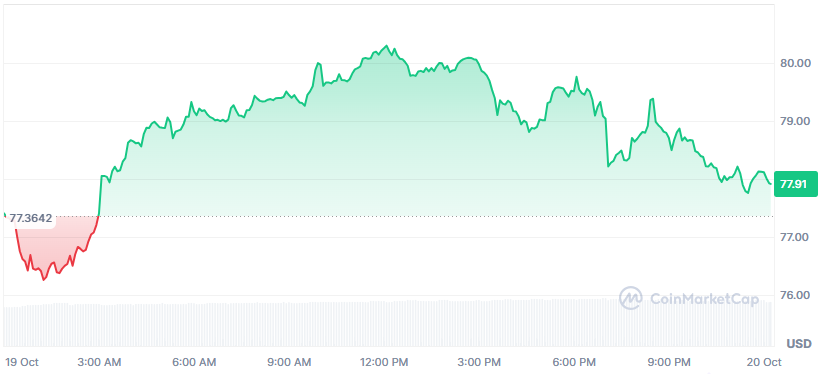
HYPE Faces Key Resistance as Buyers Defend the $75–$77 Support Zone
Crypto analyst Trader Symba suggests that Hyperliquid’s HYPE token could be forming a local bottom around the $75–$77 support zone. Traders are watching whether buyers can defend this area and prevent further short-term losses. Sustained support could provide a foundation for a recovery, although the token’s near-term market structure remains weak.
According to the technical analysis, HYPE needs to reclaim the $82–$83 resistance range to strengthen its recovery outlook. A sustained move above this area could signal improving buying pressure and open the way toward the next resistance zone between $86 and $88.
However, a stronger bullish outlook depends on HYPE breaking above the $82–$83 range. Failure to reclaim this level could leave the token vulnerable to further declines. Conversely, continued support above $75–$77 would strengthen the possibility that the token is establishing a local bottom.
Pump.fun Integrates Hyperliquid Perpetual Futures for Bitcoin and Ethereum Trading
According to Hyperliquid Daily, Pump.fun is expanding beyond its Solana-based meme coin trading business by integrating Hyperliquid-powered perpetual futures into its platform.
The integration gives users access to leveraged Bitcoin and Ethereum markets through Pump.fun’s interface, potentially introducing Hyperliquid’s trading infrastructure to a broader audience.
The integration could increase activity across Hyperliquid’s ecosystem by connecting its derivatives infrastructure with Pump.fun’s existing user base. Hyperliquid provides the underlying trading infrastructure, including order matching, collateral management, funding payments, and liquidations, while Pump.fun offers the user-facing interface and can earn builder fees.
The move also highlights Hyperliquid’s approach of extending its infrastructure to third-party applications rather than relying exclusively on its native platform. If additional applications adopt similar integrations, Hyperliquid could benefit from broader market exposure and increased trading volume. Meanwhile, platforms such as Pump.fun could diversify their offerings beyond meme coin trading.