


Avalanche is approaching a key resistance area, with a breakout potentially strengthening its bullish market structure. A successful retest could support further upside, while a failed move may renew selling pressure. Meanwhile, South Korea’s tokenization framework could strengthen Avalanche’s role in institutional blockchain infrastructure and expand network adoption.
As of now, according to CoinMarketCap data, Avalanche is trading at $10.84, with a decrease of 2.10% over the past 24 hours and an increase of 4.99% over the past week.
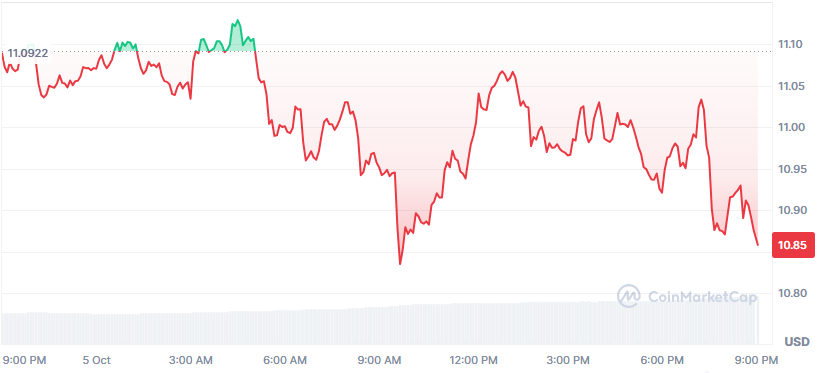
AVAX Price Analysis: Weekly Breakout Could Open Path Toward $20
According to crypto analyst Giannis Andreou, Avalanche is approaching a key descending trendline, making the $10–$12 area an important zone for the next major price move. A confirmed breakout could improve the market structure and shift attention toward higher resistance levels.
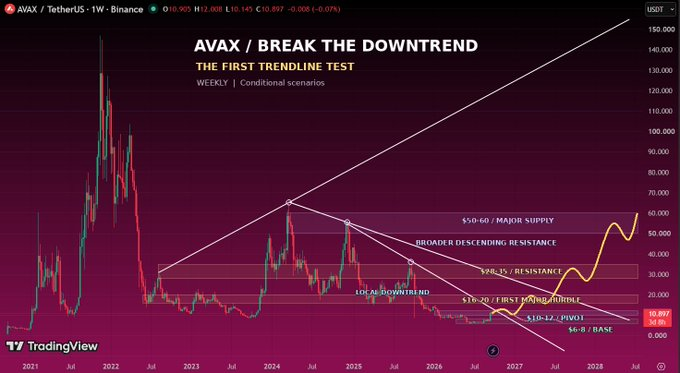
The immediate focus remains on the steeper descending trendline, with $10–$12 acting as the key pivot zone. A weekly close above this resistance, followed by a successful retest, could provide stronger confirmation that buyers are gaining control and potentially open the path toward $16–$20.
If AVAX clears the broader descending resistance as well, the bullish setup could strengthen further, bringing the $28–$35 range into focus. Beyond that zone, the $50–$60 area remains a longer-term resistance region based on historical supply, although reaching those levels would require sustained buying pressure.
However, the setup could turn bearish if the breakout fails and AVAX loses the $10 support level. Such a breakdown could expose the $6–$8 base again. The analyst stressed that the weekly close remains important for confirmation, meaning traders may need to wait for clearer evidence before treating the breakout as established.
South Korea Unveils Tokenization Rules as Avalanche Infrastructure Gains Key Role
The data from Avalanche further shows that South Korea has introduced new regulatory rules aimed at bringing traditional financial assets onto blockchain networks, creating a framework for tokenized stocks, bonds, and investment funds. The changes are expected to allow these assets to be issued and traded onchain beginning in February 2027.
The new framework places the Korea Securities Depository (KSD) at the center of the infrastructure supporting tokenized securities. As the country’s central securities depository, KSD is expected to play a key role in connecting traditional capital markets with blockchain-based systems under the new rules.
Avalanche is also emerging as part of this infrastructure push, with KSD already working on connectivity involving the Avalanche network. This could give Avalanche a direct role in the technical infrastructure supporting South Korea’s broader move toward blockchain-based securities and potentially expand institutional use of its network.
The development marks another step toward integrating traditional financial markets with blockchain technology. If implementation proceeds as planned, the February 2027 rollout could create a regulated pathway for a large portion of South Korea’s capital markets to operate through tokenized infrastructure, increasing the potential role of networks such as Avalanche.